

Hunepulley Answers: What Happens to U Groove Plastic Pulley Wheels on Angled
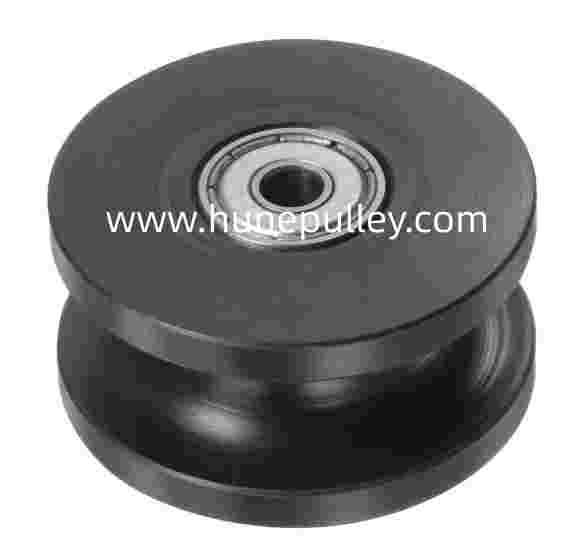
Designers working on sliding mechanisms or guidance systems often pause when the path includes turns. Questions arise about whether Hune U Groove Plastic Pulley Wheels can maintain steady motion along curved or angled tracks without catching or drifting sideways.
Picture a cabinet door that follows a gentle arc or a gate mechanism that shifts direction midway. The wheel must stay seated in its channel while the angle changes. A mismatched profile might ride up on one side during the transition, creating resistance that builds with each cycle.
The groove itself plays a central role here. Its rounded shape allows the wheel to cradle a round rail or cable more evenly than sharper alternatives. On a straight section this contact feels uniform. When the track begins to curve, however, the wheel encounters shifting pressure zones. The outer edge may press harder while the inner side lightens, which can lead to slight wobble if the dimensions sit even a fraction off.
Angle adds its own demands. Mild inclines require the wheel to balance load without sliding downward. Steeper changes test how well the groove grips during acceleration or deceleration. Teams notice that wheels with consistent wall thickness around the channel tend to handle these shifts with less drama.
Many setups benefit when the entire assembly stays lightweight. Removing the central shaft reduces mass and simplifies entry into confined areas. The absence of extra internal elements can also lower the chance of binding when the path twists. Some applications run effectively without any bearing when movement stays occasional rather than continuous.
Customization becomes valuable precisely in these situations. A project might need a slightly deeper channel to keep the rail captured around a bend. Another could call for a modified flange height so the wheel clears surrounding edges during the turn. Injection molding supports these tweaks by allowing adjustments to the outer contour or inner profile after initial samples arrive.
Conversations with manufacturers usually start with a description of the actual layout. Photos or rough sketches of the track help illustrate where the curve begins and how tight the radius runs. From there suggestions emerge about possible changes to wheel diameter or edge rounding that improve following behavior.
Quiet operation often ranks high among priorities, especially in residential or office environments. Wheels that maintain even contact through a curve produce less vibration and fewer intermittent sounds. Subtle adjustments to surface texture or contact angle can soften the experience without altering the basic function.
Wear patterns shift noticeably on non-linear paths. Straight runs distribute friction evenly across the groove. Curved sections concentrate stress on certain portions of the wheel, which may accelerate surface changes on one side first. Teams sometimes request minor reinforcements in high-contact zones or select materials that resist deformation under repeated side loading.
Integration with the larger system matters too. The pulley must work in harmony with the rail material and any tension elements present. A well-matched wheel reduces the need for additional guides or frequent realignment after installation. This harmony becomes especially noticeable when the track includes multiple direction changes in sequence.
Small production needs appear frequently during prototyping or renovation work. A single custom run of wheels tailored to a specific curve radius allows testing without committing to large volumes. Flexibility in this area helps developers refine the design quickly based on real-world movement observations.
Some challenges surface only after initial trials. A wheel that performed adequately on paper might show slight hesitation at the apex of a bend. Open dialogue at that stage often leads to quick revisions, such as a small increase in groove width or a tweak to the overall height.
Projects evolve in interesting ways once the basic motion works reliably. Success on curved sections can inspire similar solutions for other parts of the assembly. The ability to produce matching small plastic components in one place keeps everything consistent in feel and appearance.
Throughout development, attention stays on how the wheel interacts with the path rather than forcing a standard part into service. This perspective helps avoid common frustrations like intermittent sticking or gradual increase in required effort.
For teams facing track layouts that include curves or angles, or needing tailored small injection molded solutions including options without shafts or bearings, reaching out to experienced producers opens practical routes. Hunepulley appears in many such discussions when custom plastic pulley wheels become part of the conversation. Visit https://www.hunepulley.com/product/plastic-bearing-pulley/ushaped-bearing-pulley/ in the middle of planning your next motion system to see how adaptations can suit curved or angled track requirements.