


Why Tractors Remain the Backbone of Modern Agricultural Transformation
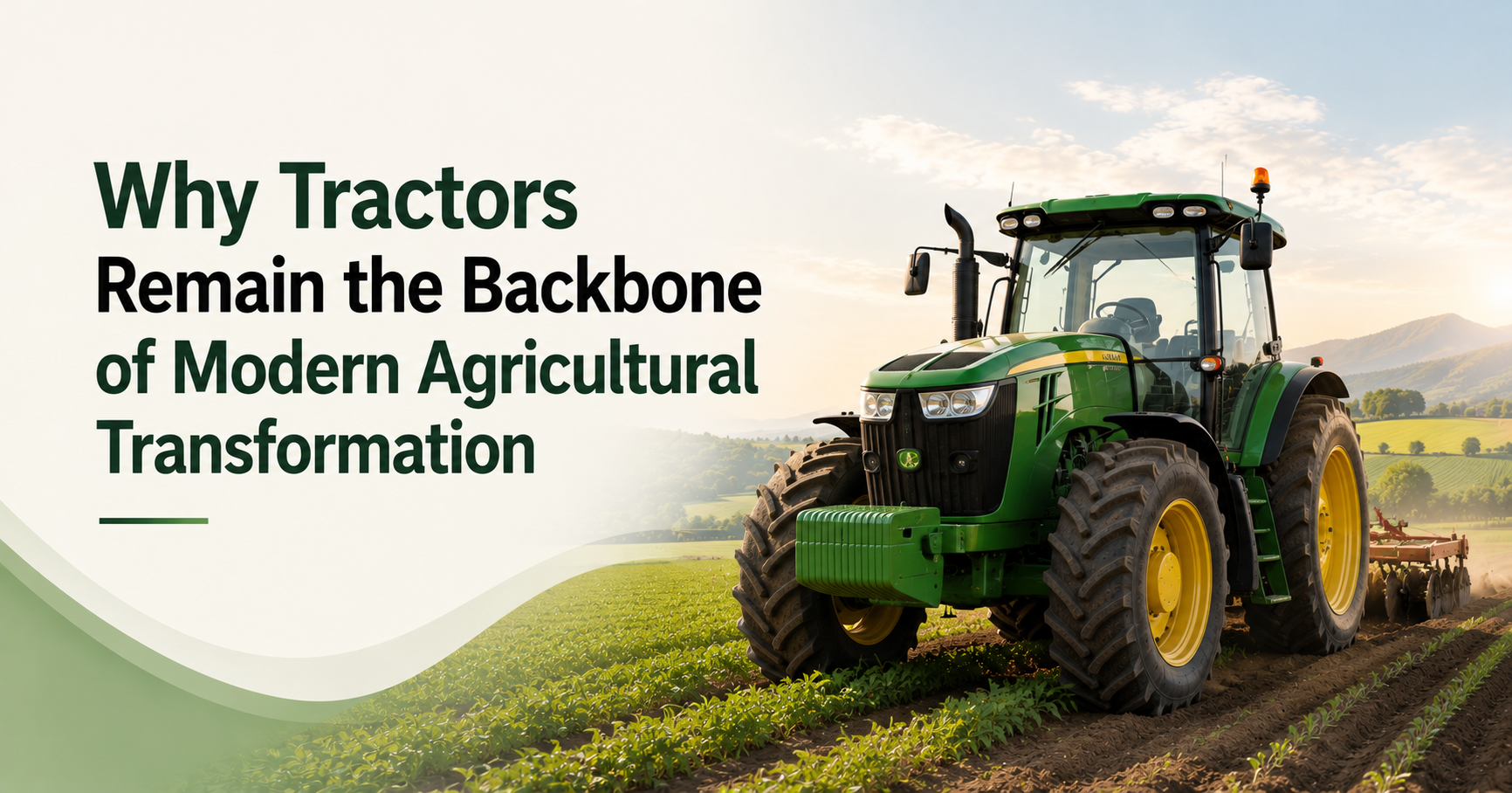
Modern agriculture is evolving rapidly as farmers seek greater productivity, improved operational efficiency, and better resource management. At the center of this transformation is the tractor, a machine that has become indispensable across farms of every size. From land preparation and planting to harvesting and transportation, tractors continue to simplify labour-intensive activities while supporting higher agricultural output.
Growing food demand, increasing labour shortages, and the need for precision farming are encouraging farmers to invest in more capable machinery. Alongside traditional diesel-powered equipment, manufacturers are introducing smart technologies, automation features, and digital connectivity that improve operational efficiency. These advancements are reshaping the role of tractors from simple mechanical equipment into intelligent farming assets.
The evolution of farming practices also reflects broader sustainability goals. Farmers increasingly require equipment that reduces fuel consumption, minimizes downtime, and supports precision agriculture. These changing expectations are influencing equipment manufacturers to integrate GPS guidance, telematics, data analytics, and automated steering systems into their latest tractor models.
Mechanization Continues to Strengthen Agricultural Productivity
Mechanization has become one of the strongest contributors to agricultural modernization worldwide. Tractors reduce dependence on manual labor while enabling farmers to complete seasonal activities within shorter timeframes. This capability becomes especially valuable during planting and harvesting seasons when delays can significantly affect crop yields.
According to the latest industry analysis, the global tractor sector is projected to expand from USD 93.97 billion in 2026 to USD 128.89 billion by 2032, growing at a CAGR of 5.41%. Rising agricultural mechanization, coupled with increasing adoption of precision farming technologies, continues to support long-term industry development. global agricultural machinery trends are expected to remain an important factor influencing equipment demand.
Technology Is Changing Tractor Capabilities
Today's tractors are equipped with features that extend well beyond traditional engine performance. GPS-assisted navigation, real-time field mapping, automated steering, telematics, and predictive maintenance systems allow operators to improve field accuracy while reducing unnecessary fuel usage.
Digital monitoring also enables fleet owners to evaluate equipment utilization, maintenance schedules, and operating costs more effectively. These capabilities help reduce downtime and improve overall farm profitability while supporting more sustainable agricultural operations.
Precision Agriculture Is Driving Equipment Innovation
Precision farming has become an important strategy for maximizing crop productivity while conserving valuable resources. Modern tractors now integrate with variable-rate technology, sensors, and farm management software to optimize planting density, fertilizer application, irrigation planning, and harvesting efficiency.
This integration allows farmers to make better decisions using field-specific data rather than applying uniform farming practices across entire fields. Organizations such as the Food and Agriculture Organization have consistently emphasized the importance of sustainable mechanization in improving agricultural productivity and food security worldwide.
Regional Demand Patterns Continue to Evolve
Demand for tractors varies across regions depending on farm sizes, agricultural policies, crop diversity, and levels of mechanization. Emerging economies continue investing in agricultural modernization programs, while developed markets focus increasingly on automation, emissions reduction, and digital farming technologies.
Asia-Pacific remains one of the most significant contributors to global tractor demand due to its extensive agricultural activities and ongoing investments in farm mechanization. Government incentives supporting equipment purchases and rural infrastructure development further strengthen long-term adoption across several countries.
Sustainability Is Becoming a Competitive Advantage
Environmental considerations are influencing equipment design as manufacturers explore cleaner propulsion technologies alongside improvements in engine efficiency. Lower emissions, reduced fuel consumption, and compatibility with precision agriculture systems are becoming increasingly important purchasing considerations.
Manufacturers are also investing in alternative propulsion systems, lightweight materials, and smarter hydraulic systems that reduce operational costs while improving overall equipment performance. These developments align with broader efforts to create more environmentally responsible agricultural operations.
Challenges Still Require Strategic Solutions
Despite continued technological progress, several challenges remain. High acquisition costs, maintenance expenses, financing limitations, and uneven technology adoption continue to influence purchasing decisions, particularly among small and medium-sized farms.
Training operators to effectively utilize advanced digital features is equally important. As tractors become increasingly software-driven, farmers require greater technical knowledge to maximize equipment capabilities and return on investment.
Looking Ahead
The future of agricultural mechanization will likely be defined by greater automation, enhanced connectivity, and data-driven decision-making. Intelligent tractors capable of communicating with broader farm management ecosystems are expected to become increasingly common as digital agriculture continues expanding.
Research institutions and organizations including the United States Department of Agriculture continue highlighting the role of advanced mechanization in improving productivity, sustainability, and long-term food security. As agriculture adapts to changing environmental and economic conditions, tractors will remain one of the industry's most valuable technological assets.