


How Ultrafast Charging Is Reshaping European Mobility
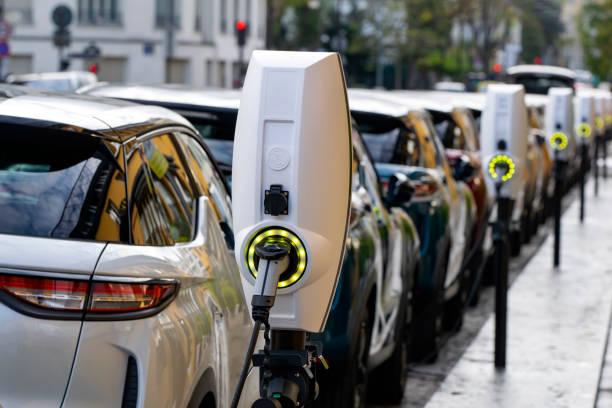
Electric mobility in Europe is moving into a phase where charging speed is becoming as important as charger availability. Drivers increasingly expect electric vehicles to support longer journeys without extended stops, while commercial fleets need predictable charging schedules to maintain operational efficiency. Ultrafast charging is emerging as a critical infrastructure layer because it can reduce waiting times and make electric mobility more practical for motorway travel, logistics routes, and high-traffic urban corridors.
The expansion of high-power EV charging infrastructure is also changing how operators plan public charging networks. Instead of focusing only on the number of installed charging points, infrastructure developers are paying greater attention to power capacity, site utilisation, grid access, and vehicle compatibility. These factors determine whether a charging location can serve growing electric vehicle volumes while maintaining a consistent experience during periods of high demand.
According to an analysis published by MarkNtel Advisors, the Europe Ultrafast Charging Market is estimated at around USD 443 million in 2026 and is projected to expand at a CAGR of approximately 14.19% during 2026–2032. The outlook reflects the broader shift toward faster charging solutions as battery-electric vehicle adoption, long-distance mobility requirements, and public charging expectations continue to influence infrastructure planning across European countries.
Charging Speed Is Becoming a Mobility Requirement
Conventional public charging remains suitable for many daily travel patterns, particularly when vehicles can remain parked for several hours. However, motorway users and fleet operators often require a different charging experience. High-power systems can transfer more energy within a shorter period, although actual charging speed depends on battery temperature, vehicle architecture, charging curves, and the maximum power accepted by the vehicle.
The International Energy Agency reported that around 20% of ultrafast chargers in the European Union deliver 350 kW or more. It also noted that the higher-power segment of ultrafast chargers almost doubled in 2024 compared with 2023, indicating continued infrastructure preparation for vehicles capable of accepting greater charging power.
This shift has implications beyond passenger convenience. Electric taxis, delivery fleets, buses, and long-distance commercial vehicles operate under tighter schedules. Reduced charging duration can help operators improve vehicle utilisation and plan routes with fewer extended interruptions. As electric fleets expand, charging sites may increasingly be evaluated by throughput and operational reliability rather than simply by the number of available connectors.
European Regulation Is Influencing Network Expansion
Public policy is another important factor shaping charging deployment. The European Union's Alternative Fuels Infrastructure Regulation establishes infrastructure requirements intended to support alternative-fuel mobility across major transport routes. For light-duty electric vehicles, the regulation includes mandatory fleet-based public charging power targets, linking available charging output with the number of battery-electric and plug-in hybrid vehicles.
Infrastructure requirements are particularly relevant along the Trans-European Transport Network. The European Environment Agency explains that publicly accessible recharging pools for light-duty electric vehicles must be deployed along the TEN-T network, while heavy-duty electric vehicles require access to minimum 350 kW charging output at defined intervals on core and comprehensive routes.
Such requirements encourage a more coordinated approach to charger placement. A dense network in major cities alone may not fully support cross-border electric travel. Drivers also need dependable charging along motorways and regional transport corridors. The development of strategically located high-power hubs can therefore help reduce charging uncertainty and improve continuity between national charging networks.
Grid Capacity Is Central to Ultrafast Charging
Installing an ultrafast charger involves more than placing hardware at a parking location. High-power charging sites can create substantial electricity demand, particularly when several vehicles charge simultaneously. Developers must assess local grid capacity, connection timelines, transformer requirements, and peak demand before a site becomes operational. In constrained areas, grid availability can influence both project costs and deployment schedules.
Energy storage and intelligent power management are increasingly relevant to this challenge. Battery storage can help charging operators manage periods of high demand, while smart charging systems can distribute available power between vehicles according to charging requirements. These technologies do not remove every grid constraint, but they can support more efficient use of available electrical capacity and improve the operational design of high-power charging hubs.
Vehicle Technology Must Keep Pace With Chargers
The performance of an ultrafast charging network is closely linked to electric vehicle design. A charger may offer very high power, but the vehicle determines how much energy it can safely accept at a given moment. Battery chemistry, thermal management, voltage architecture, and software-controlled charging curves all influence real-world charging performance. Consequently, charger power ratings alone do not define the complete user experience.
Automakers are increasingly developing vehicle platforms designed around faster direct-current charging. Higher-voltage architectures can support efficient energy transfer, while improved battery cooling helps maintain suitable temperatures during charging. As these technologies become more widely adopted, infrastructure operators may gain stronger utilisation opportunities for higher-power charging equipment that currently exceeds the charging capability of many existing electric vehicles.
Charging Hubs Are Becoming More Service-Oriented
Ultrafast charging locations are also evolving into broader mobility facilities. Because drivers may spend a short but meaningful period at a charging site, location design can influence the overall experience. Safe access, weather protection, lighting, payment simplicity, charger reliability, and nearby amenities are becoming important considerations. Operators must also design layouts that can accommodate different vehicle dimensions and prevent unnecessary congestion.
For commercial vehicles, site design is even more complex. Electric trucks and large fleet vehicles require sufficient turning space, appropriate connector positioning, and charging systems capable of supporting substantial energy requirements. The next phase of European charging development is therefore likely to involve greater differentiation between passenger-car hubs, urban fleet facilities, depot charging sites, and heavy-duty transport corridors.
Reliability Will Define the Next Charging Phase
As ultrafast charging networks expand, infrastructure quality may become more important than headline charging power. Drivers expect chargers to be operational, easy to locate, compatible with their vehicles, and supported by straightforward payment systems. A high-power charger that is unavailable or poorly maintained provides limited mobility value. Remote monitoring, predictive maintenance, and responsive technical support are therefore becoming integral parts of charging operations.
Europe's transition toward electric mobility is creating a more demanding environment for charging infrastructure. Ultrafast charging can support long-distance travel, commercial fleet electrification, and higher vehicle utilisation, but successful deployment depends on coordinated grid planning, compatible vehicle technology, reliable hardware, and thoughtful site design. The future of European charging will be shaped not only by faster equipment, but by networks capable of delivering dependable high-power access where electric drivers and fleets need it most.