


How Automotive AI Is Reshaping India's Mobility Future
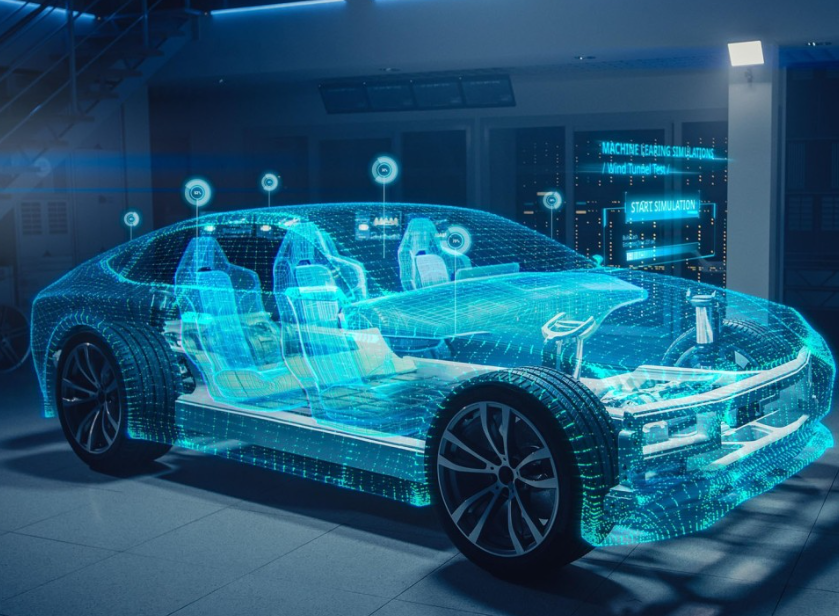
Artificial intelligence is moving deeper into India's automotive ecosystem as vehicles, factories, and mobility services become increasingly software-driven. AI is no longer limited to experimental autonomous vehicles. It is being applied to driver assistance, vehicle diagnostics, production planning, quality inspection, connected services, and in-car experiences. This shift is changing how automotive businesses approach safety, efficiency, and product development.
One important development is the wider integration of machine learning and computer vision into vehicles and automotive operations. Research into AI-enabled mobility solutions in India indicates that intelligent technologies are gaining relevance across automotive manufacturing and vehicle applications. The ability to analyse large volumes of sensor and operational data is helping companies identify patterns and support faster decisions.
The economic direction also reflects this technological transition. According to the study published by MarkNtel Advisors, India's automotive AI sector is projected to expand from USD 0.97 billion in 2026 to USD 2.66 billion by 2032, registering an estimated CAGR of 18.31% during 2026–2032. The figures suggest that AI capabilities are becoming increasingly important within India's broader automotive technology landscape.
Computer Vision Is Strengthening Vehicle Intelligence
Computer vision is one of the most practical applications of automotive AI. Cameras combined with AI algorithms can interpret visual information from roads, vehicles, pedestrians, traffic signs, and surrounding objects. These capabilities support advanced driver assistance systems, including collision warnings, lane monitoring, object recognition, and parking assistance. The MarkNtel Advisors study identifies computer vision as a significant AI technology segment within India's automotive AI landscape.
India's complex driving environment makes visual intelligence particularly relevant. Roads may include mixed vehicle types, pedestrians, changing lane behaviour, and unexpected obstacles. AI models designed for automotive applications therefore need diverse training data and careful validation. India's policy discussion on autonomous vehicles also recognises that advances in AI, sensors, and hardware are enabling automated driving functions while introducing new safety considerations.
ADAS Is Bringing AI Closer to Everyday Drivers
Advanced driver assistance systems, commonly known as ADAS, are making artificial intelligence more visible to vehicle users. Features such as adaptive cruise control, emergency braking, blind-spot monitoring, and lane assistance depend on sensors, software, and intelligent data processing. Instead of replacing the driver, many current systems are designed to support awareness and reduce risks in specific driving situations.
Recent regulatory developments may also support wider deployment of intelligent safety technologies. India removed licensing requirements for spectrum used by automotive radar sensors and certain vehicle communication systems in June 2026. The regulatory change could simplify the use of standardised radar and vehicle-to-everything technologies, which are important foundations for advanced safety and connected driving systems.
AI Is Transforming Automotive Manufacturing
The impact of artificial intelligence extends beyond the vehicle itself. Automotive factories are adopting AI-based systems for visual quality inspection, predictive maintenance, production monitoring, and process optimisation. Machine learning can examine equipment data to identify unusual patterns, while computer vision can assist in detecting manufacturing defects that require further inspection. These applications can support more consistent production processes when implemented with appropriate human oversight.
Predictive maintenance is another area receiving attention. Instead of relying only on fixed maintenance schedules, AI systems can analyse equipment conditions and operational patterns to identify potential problems. NITI Aayog has highlighted the growing use of AI-driven predictive maintenance in modern automotive factories as part of the broader transformation of automotive manufacturing and global value-chain participation.
Connected Vehicles Are Creating New Data Opportunities
Connected vehicles generate information from sensors, navigation systems, powertrains, and digital interfaces. AI can process this data to support vehicle health monitoring, route intelligence, personalised functions, and predictive service requirements. For electric vehicles, intelligent software may also assist with battery monitoring, energy management, and driving pattern analysis. The value of these systems depends heavily on data quality, cybersecurity, and responsible information management.
In-car experiences are also becoming more intelligent. Voice assistants, contextual interfaces, and personalised digital functions are gradually changing interactions between drivers and vehicles. Generative AI could further improve natural-language communication, although automotive deployment requires greater attention to accuracy and safety than many consumer applications. Incorrect or unpredictable responses can create additional concerns when technology operates within a driving environment.
India's Road Conditions Require Locally Trained AI
Automotive AI developed for one geography may not perform identically in another. India's mobility environment includes dense traffic, two-wheelers, varied road infrastructure, pedestrians, and diverse weather conditions. AI systems therefore require locally relevant datasets and extensive real-world testing. Computer vision models must recognise objects and traffic situations that accurately reflect the operating conditions in which vehicles will actually be used.
This creates an important engineering challenge for automakers and technology developers. Expanding datasets alone is not sufficient; developers also need to examine model bias, rare driving events, sensor limitations, and system behaviour in unfamiliar conditions. Human-centred design and clear driver communication will remain essential as increasingly intelligent features enter passenger and commercial vehicles.
Responsible AI Will Shape the Next Phase of Mobility
The development of automotive AI in India is likely to depend on more than algorithmic capability. Safety validation, cybersecurity, data governance, infrastructure readiness, and regulatory clarity will influence how quickly intelligent systems move from premium applications to broader vehicle categories. Collaboration between automakers, component suppliers, software developers, researchers, and public institutions may become increasingly important as vehicle architecture grows more complex.
Artificial intelligence is gradually changing India's automotive ecosystem from hardware-centred engineering toward connected and software-supported mobility. The immediate impact is visible in ADAS, manufacturing automation, computer vision, predictive systems, and digital vehicle experiences. As adoption develops, the central challenge will be ensuring that automotive AI is designed around India's operating conditions while maintaining reliability, safety, and responsible data practices.

