


How to Choose Industrial Laser Sensors for Automation Systems
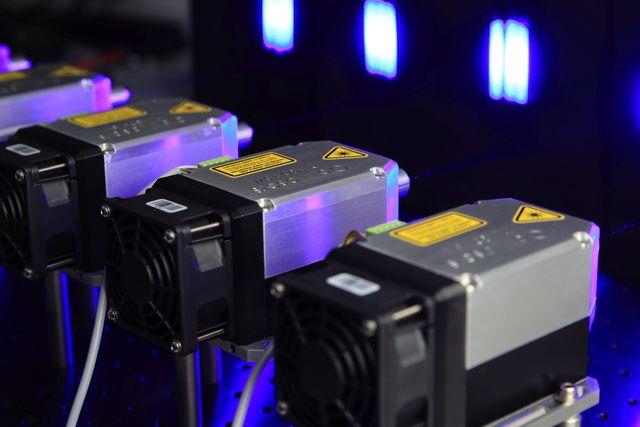
Automation has become the backbone of modern manufacturing, enabling businesses to achieve higher productivity, improved quality, and reduced operational costs. One of the key technologies driving this transformation is Industrial Laser Sensors, which provide highly accurate, non-contact detection and measurement for a wide range of industrial applications. Whether you need precise distance measurement, object detection, positioning, or quality inspection, selecting the right laser sensor is essential for ensuring reliable automation performance. This guide explains how to choose the best industrial laser sensors for your automation systems, helping you make an informed investment that enhances efficiency and long-term productivity.
As industries continue to adopt smart manufacturing and Industry 4.0 technologies, laser sensors have become indispensable across sectors such as automotive, electronics, pharmaceuticals, food processing, logistics, packaging, and robotics. Understanding their working principles, types, features, and selection criteria will help engineers, maintenance teams, and business owners choose the most suitable solution for their applications.
What Are Industrial Laser Sensors?
Industrial laser sensors are advanced electronic devices that use a focused laser beam to detect, measure, or inspect objects without physical contact. Unlike traditional contact-based sensors, laser sensors offer exceptional accuracy, fast response times, and consistent performance, even in demanding industrial environments.
They are widely used for:
- Distance measurement
- Object detection
- Position sensing
- Thickness measurement
- Height measurement
- Presence or absence detection
- Alignment verification
- Quality inspection
Because they operate without touching the target object, laser sensors minimize wear and maintenance while ensuring highly reliable performance.
How Do Industrial Laser Sensors Work?
Laser sensors emit a focused beam of light toward a target. The reflected beam is captured by an internal receiver, and advanced electronics calculate measurements based on the reflection.
Different technologies include:
Time of Flight (ToF)
Measures the time taken by the laser beam to travel to the object and back.
Best suited for:
- Long-distance measurement
- Warehouse automation
- Conveyor systems
- Material handling
Triangulation
Determines distance by measuring the angle of reflected light.
Ideal for:
- High-precision measurements
- Short-range applications
- Electronics manufacturing
- Quality inspection
Laser Reflection
Used primarily for object detection and positioning.
Applications include:
- Product counting
- Package detection
- Machine automation
- Robotic guidance
Why Laser Sensors Are Preferred in Industrial Automation
Compared to conventional sensors, laser sensors provide significant advantages.
Exceptional Accuracy
Laser sensors deliver highly precise measurements, often within microns, making them ideal for precision manufacturing.
Non-Contact Operation
Since there is no physical contact with the object:
- No mechanical wear
- Reduced maintenance
- Longer sensor life
- Suitable for delicate products
High-Speed Detection
Modern manufacturing lines require rapid inspection.
Laser sensors provide:
- Fast response time
- High sampling rates
- Reliable detection on moving objects
Compact Design
Despite their advanced technology, many industrial laser sensors have compact dimensions, allowing installation in tight machine spaces.
Long Measuring Distance
Certain models can accurately detect objects several meters away while maintaining precision.
Types of Industrial Laser Sensors
Choosing the correct type depends on your specific application.
Laser Distance Sensors
These sensors accurately measure the distance between the sensor and the target.
Applications:
- Material positioning
- Crane automation
- Warehouse systems
- Conveyor monitoring
Laser Displacement Sensors
Designed for extremely precise dimensional measurements.
Common uses:
- Thickness measurement
- Flatness inspection
- Height verification
- Gap measurement
Laser Photoelectric Sensors
Used to detect the presence or absence of objects.
Industries include:
- Packaging
- Food processing
- Pharmaceutical manufacturing
- Assembly automation
Laser Profile Sensors
These sensors capture the contour or profile of objects.
Suitable for:
- Weld inspection
- Surface analysis
- Shape verification
- Automated quality control
Laser Position Sensors
Position sensors ensure accurate movement and alignment of machine components.
Applications include:
- CNC machines
- Robotic arms
- Pick-and-place systems
- Assembly lines
Applications of Industrial Laser Sensors
Industrial laser sensors have become essential across multiple industries due to their speed, precision, and reliability.
Automotive Industry
Automotive manufacturers use laser sensors for:
- Robotic welding
- Body alignment
- Gap measurement
- Component inspection
- Assembly verification
High precision ensures improved vehicle quality and manufacturing consistency.
Electronics Manufacturing
Electronic components require micron-level accuracy.
Laser sensors assist in:
- PCB inspection
- Component placement
- Semiconductor manufacturing
- Connector verification
Packaging Industry
Packaging lines operate at extremely high speeds.
Laser sensors help with:
- Carton detection
- Label positioning
- Bottle inspection
- Package counting
Food and Beverage Industry
Non-contact sensing makes laser sensors ideal for food production.
Applications include:
- Bottle positioning
- Filling inspection
- Package detection
- Conveyor automation
Because there is no physical contact, hygiene standards remain uncompromised.
Pharmaceutical Industry
Precision and cleanliness are critical.
Laser sensors support:
- Tablet counting
- Packaging verification
- Label inspection
- Medical device manufacturing
Logistics and Warehousing
Modern warehouses rely heavily on automation.
Laser sensors enable:
- AGV navigation
- Barcode positioning
- Package sorting
- Pallet detection
Factors to Consider When Choosing Industrial Laser Sensors
Selecting the right sensor involves evaluating several technical and operational parameters.
Measuring Range
Determine the required sensing distance.
Different applications may require:
- Short range (up to 100 mm)
- Medium range (100 mm–2 m)
- Long range (over 2 m)
Always choose a sensor with a measuring range suitable for your application.
Accuracy Requirements
Some industries require micron-level precision, while others only need basic object detection.
Consider:
- Required tolerance
- Measurement resolution
- Repeatability
- Calibration capability
Target Material
Different materials reflect laser beams differently.
Target surfaces may include:
- Metal
- Plastic
- Glass
- Rubber
- Wood
- Transparent materials
Certain laser sensors are specifically designed to detect transparent or highly reflective surfaces.
Response Speed
Fast-moving production lines demand high-speed sensing.
Evaluate:
- Response time
- Scan frequency
- Sampling rate
Higher speeds improve productivity while reducing inspection errors.
Environmental Conditions
Industrial environments can be challenging.
Consider exposure to:
- Dust
- Oil
- Moisture
- Heat
- Vibration
- Chemicals
Choose sensors with appropriate IP protection ratings and rugged housing.
Mounting Requirements
Review available installation space.
Factors include:
- Sensor dimensions
- Mounting brackets
- Cable routing
- Adjustment capability
Proper mounting improves measurement stability.
Communication Interfaces
Modern automation systems require seamless integration with PLCs, robots, and industrial networks.
Common communication options include:
- IO-Link
- Ethernet/IP
- PROFINET
- Modbus
- Analog Output
- Digital Output
Selecting compatible communication protocols simplifies installation and future upgrades.
Choosing a Reliable Supplier
Apart from selecting the right sensor specifications, partnering with a trusted supplier is equally important. A reliable supplier provides quality products, technical guidance, after-sales support, and application expertise to ensure smooth implementation. Genesis Technomation India Pvt Ltd offers a comprehensive range of industrial laser sensors designed for modern automation applications. Whether you require sensors for distance measurement, object detection, positioning, or quality inspection, they provide dependable solutions backed by technical support, making them an excellent choice for businesses looking to Buy Industrial Laser Sensors in India.
Best Practices for Installing Industrial Laser Sensors
Even the most advanced laser sensor cannot deliver accurate results if it is installed incorrectly. Proper installation ensures reliable measurements, minimizes downtime, and extends the lifespan of the sensor.
Position the Sensor Correctly
The sensor should have a clear, unobstructed view of the target object. Avoid placing it where machinery, cables, or structural components may block the laser beam.
Proper positioning helps:
- Improve measurement accuracy
- Reduce false detections
- Increase system reliability
- Simplify maintenance
Maintain the Recommended Sensing Distance
Every industrial laser sensor is designed to operate within a specified measuring range. Positioning the sensor too close or too far from the target may reduce accuracy.
Always refer to the manufacturer's recommended sensing distance before installation.
Ensure Stable Mounting
Industrial environments often experience vibrations from heavy machinery.
Use:
- Rigid mounting brackets
- Vibration-resistant fixtures
- Adjustable mounting accessories
Stable installation prevents measurement drift and ensures consistent performance.
Protect Against Environmental Factors
Although many laser sensors feature IP-rated enclosures, excessive dust, moisture, oil mist, or chemicals may still affect performance.
Protective measures include:
- Sensor covers
- Air purge systems
- Protective housings
- Regular cleaning schedules
Calibration and Maintenance
Routine maintenance keeps industrial laser sensors operating at peak performance and helps avoid costly production interruptions.
Regular Cleaning
Dust and debris on the optical lens can interfere with laser performance.
Recommended cleaning tools:
- Soft microfiber cloth
- Lens cleaning solution
- Compressed air (when appropriate)
Avoid abrasive materials that may scratch the optical surface.
Check Sensor Alignment
Machine vibration or accidental impacts may shift sensor alignment over time.
Inspect:
- Mounting position
- Laser alignment
- Detection accuracy
- Mechanical stability
Periodic alignment checks improve long-term reliability.
Verify Calibration
For precision applications, calibration should be performed according to the manufacturer's recommendations.
Calibration ensures:
- Accurate measurements
- Consistent repeatability
- Compliance with quality standards
- Reduced production errors
Inspect Electrical Connections
Loose cables or damaged connectors can lead to intermittent communication issues.
Regularly examine:
- Power supply
- Signal cables
- Connectors
- Communication interfaces
Preventive maintenance minimizes unexpected downtime.
Common Mistakes to Avoid When Choosing Laser Sensors
Selecting the wrong sensor can increase costs and reduce production efficiency.
Avoid these common mistakes:
Ignoring Measurement Requirements
Not every application requires micron-level precision. Purchasing a high-end sensor for a basic detection task may unnecessarily increase project costs.
Choosing Based Only on Price
The least expensive sensor is not always the most economical option. Poor-quality products often result in higher maintenance costs, reduced accuracy, and shorter service life.
Consider:
- Product quality
- Reliability
- Technical support
- Warranty
- Long-term value
Overlooking Environmental Conditions
Industrial environments vary significantly.
Failure to consider:
- Temperature
- Dust
- Humidity
- Oil exposure
- Vibration
can negatively affect sensor performance and longevity.
Ignoring Communication Compatibility
Ensure the selected sensor integrates seamlessly with existing automation equipment.
Check compatibility with:
- PLCs
- Industrial Ethernet
- IO-Link
- SCADA systems
- Robotic controllers
Selecting the Wrong Measuring Range
A sensor with insufficient range may fail to detect objects accurately, while an oversized range may reduce precision for close-distance applications.
Choose the measuring range based on actual application requirements.
Benefits of Industrial Laser Sensors in Industry 4.0
As smart factories continue to evolve, industrial laser sensors play a crucial role in digital manufacturing and intelligent automation.
Enhanced Process Automation
Laser sensors enable automated inspection and real-time measurements without human intervention.
Benefits include:
- Faster production
- Improved consistency
- Reduced labor costs
- Higher productivity
Predictive Maintenance
Modern laser sensors can provide valuable process data that helps maintenance teams identify potential issues before equipment failure occurs.
Advantages:
- Reduced downtime
- Lower maintenance costs
- Improved equipment lifespan
- Better production planning
Improved Quality Control
Laser sensors detect dimensional variations with exceptional accuracy.
Applications include:
- Surface inspection
- Dimensional verification
- Assembly validation
- Defect detection
This ensures consistent product quality throughout the manufacturing process.
Increased Production Efficiency
High-speed sensing enables manufacturers to process more products without compromising quality.
Benefits include:
- Faster cycle times
- Reduced rejection rates
- Improved throughput
- Better resource utilization
Future Trends in Industrial Laser Sensor Technology
The future of industrial sensing is driven by advancements in automation, artificial intelligence, and smart manufacturing.
AI-Assisted Inspection
Artificial Intelligence is enabling laser sensors to analyze measurement data more intelligently, improving defect detection and decision-making.
Smart Connectivity
Modern sensors increasingly support:
- IO-Link
- Ethernet/IP
- PROFINET
- OPC UA
- Industrial IoT platforms
This allows real-time data sharing across production systems.
Miniaturization
Manufacturers continue to develop compact sensors capable of delivering exceptional performance in confined spaces.
Smaller sensors are particularly valuable for:
- Robotics
- Electronics manufacturing
- Medical equipment
- Semiconductor production
Higher Precision
Advances in optics and signal processing continue to improve measurement resolution, making laser sensors suitable for even more demanding industrial applications.
Why Choose Genesis Technomation India Pvt Ltd?
Choosing a trusted supplier is just as important as selecting the right sensor. Genesis Technomation India Pvt Ltd offers a comprehensive range of industrial laser sensors designed to meet the needs of modern automation systems across various industries. Their solutions combine precision, durability, and advanced sensing technology to support applications such as object detection, distance measurement, positioning, and quality inspection.
Businesses looking to Buy Industrial Laser Sensors can benefit from Genesis Technomation India's quality products, technical expertise, and reliable customer support. Whether you're upgrading an existing automation line or implementing a new manufacturing system, they provide dependable solutions tailored to industrial requirements.
Industrial Laser Sensor Buying Checklist
Before finalizing your purchase, verify the following:
✔ Required measuring range
✔ Desired accuracy and resolution
✔ Appropriate sensing technology
✔ Target material compatibility
✔ Environmental protection rating (IP)
✔ Mounting flexibility
✔ Communication interface compatibility
✔ Response speed
✔ Maintenance requirements
✔ Availability of technical support
Following this checklist helps ensure you select the right sensor for your automation project.
Frequently Asked Questions
What are industrial laser sensors used for?
Industrial laser sensors are used for distance measurement, object detection, positioning, alignment, thickness measurement, surface inspection, and automated quality control across various manufacturing industries.
Which industries commonly use laser sensors?
Laser sensors are widely used in:
- Automotive manufacturing
- Electronics production
- Packaging
- Food processing
- Pharmaceuticals
- Warehousing and logistics
- Robotics
- Metal fabrication
Are laser sensors suitable for high-speed production lines?
Yes. Industrial laser sensors offer extremely fast response times and high sampling rates, making them ideal for high-speed automated manufacturing environments.
Can laser sensors detect transparent objects?
Yes. Many advanced laser sensors are specifically designed to detect transparent materials such as glass, plastic bottles, and transparent films.
How long do industrial laser sensors typically last?
With proper installation and maintenance, high-quality industrial laser sensors can provide reliable performance for many years, depending on operating conditions and application requirements.
Conclusion
Industrial laser sensors have become an essential component of modern automation systems, enabling manufacturers to achieve exceptional precision, faster production, and improved quality control. Their ability to perform accurate, non-contact measurements makes them ideal for industries ranging from automotive and electronics to pharmaceuticals, packaging, food processing, and logistics.
Selecting the right sensor requires careful evaluation of measuring range, accuracy, environmental conditions, communication compatibility, and application requirements. By investing in a high-quality laser sensor and following proper installation and maintenance practices, businesses can significantly improve operational efficiency while reducing downtime and maintenance costs.
When looking for reliable sensing solutions, Genesis Technomation India Pvt Ltd is a trusted partner for industrial automation. Their extensive portfolio of high-performance laser sensors is designed to support a wide range of automation applications, delivering accuracy, durability, and dependable performance. Whether you need sensors for object detection, precision measurement, positioning, or quality inspection, Genesis Technomation India Pvt Ltd provides advanced solutions backed by technical expertise and excellent customer support, making them one of the best choices to Buy Industrial Laser Sensors for modern manufacturing and automation systems.