


Kraft Paper Sleeves Vs Product Boxes
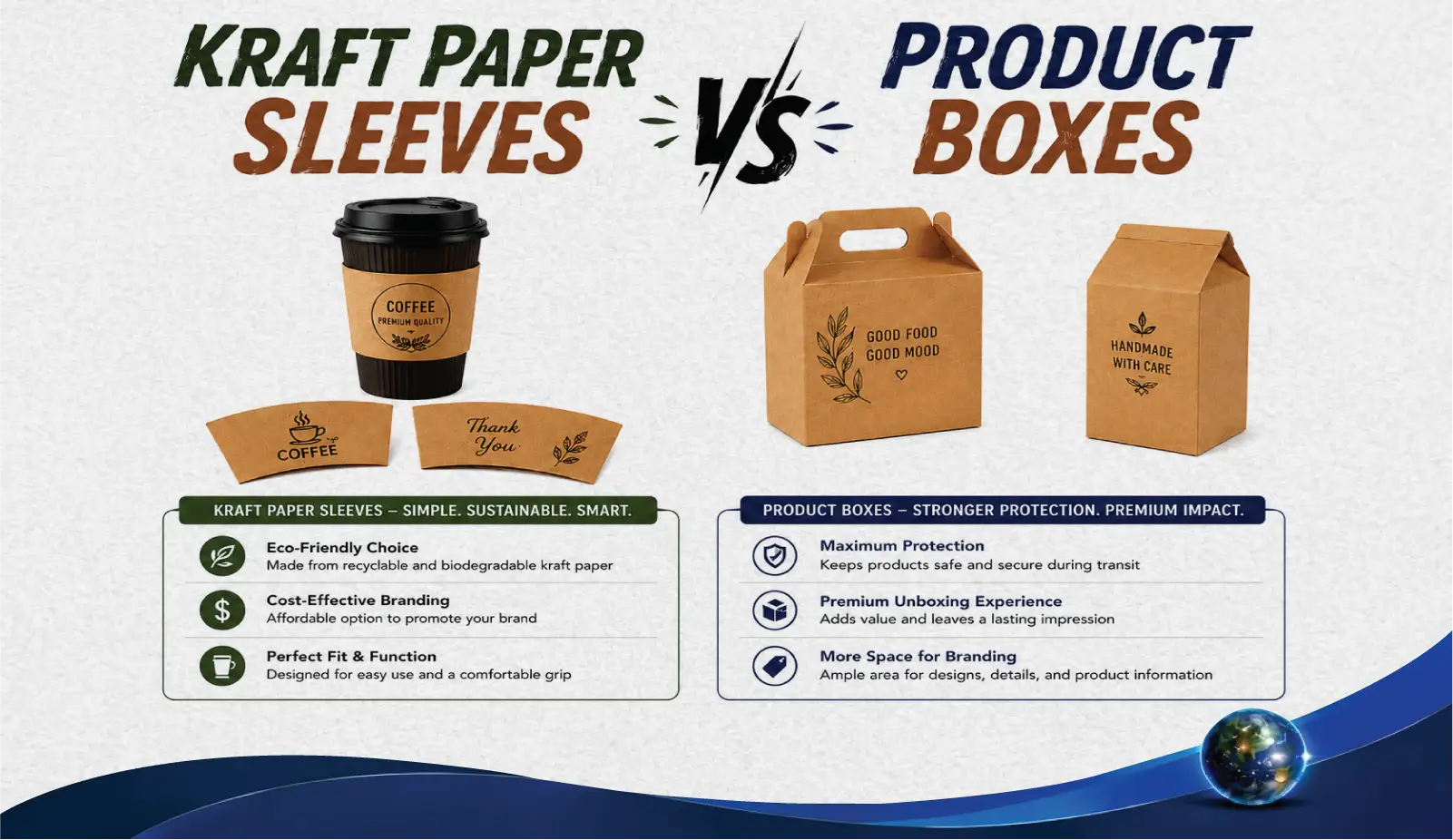
Kraft Paper Sleeves Vs Product Boxes
A sleeve is generally formed as a wraparound paper layer, while a box is formed as a more enclosed structure around the product. The choice is influenced by packaging dimensions, weight, storage conditions, display requirements, and budget. Kraft Paper Sleeves and product boxes are both widely considered for retail packaging, but their structures, material use, protection levels, and presentation differ. Paper-based formats are also considered for food packaging, cosmetic packaging, gift items, and retail products. This guide explains the main differences between sleeves and boxes, including materials, protection, printing, Canadian certifications, and sustainability considerations.
Kraft Paper Sleeves Vs Product Boxes Explained
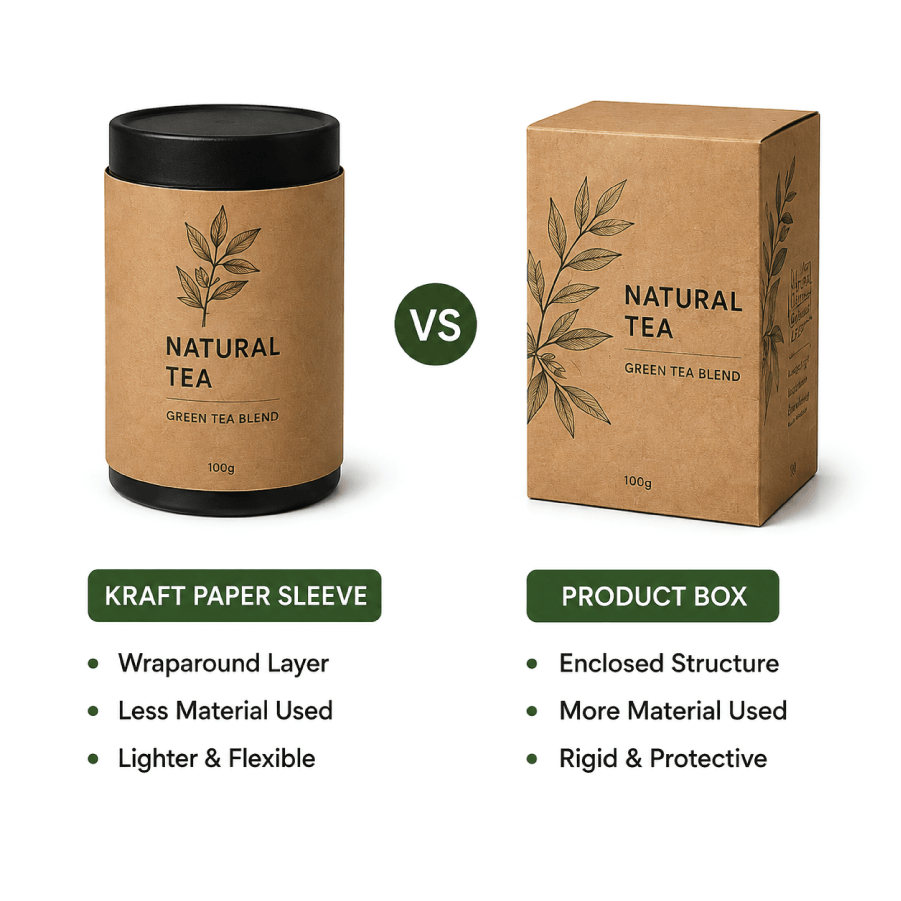
Kraft paper sleeves are considered a lightweight outer layer around an existing container, tray, pouch, or product, with less paperboard generally needed than a fully enclosed box. Product boxes provide greater coverage and are preferred when higher protection, a specific product shape, or enclosed retail presentation is required.
The following differences are useful when both formats are being reviewed:
-
Design: A sleeve is positioned around part or all of an existing package, while a box is formed as a separate enclosed structure. The level of coverage is therefore different between the two formats.
-
Material use: Kraft paper is often associated with lighter sleeve structures, while thicker paperboard is commonly specified for boxes where greater rigidity is needed.
-
Space: A sleeve generally occupies less material space, while a box requires more folded panels, seams, and structural sections.
-
Retail use: Sleeves are suited to simple shelf presentation, while boxes are more commonly specified where enclosed presentation and stronger product protection are needed.
The right format is selected according to the needs of the product rather than appearance alone. Weight, shape, handling, shipping conditions, and display requirements are reviewed before the packaging format is finalized.
Material And Design Differences Compared
Material selection is closely linked with the strength, appearance, and printing surface of paper-based packaging. Kraft paper sleeves are formed from kraft stock or paperboard according to the required thickness and structure, while paperboard packaging is preferred where greater rigidity is needed. Structural design is planned around folds, tabs, openings, seams, and packaging dimensions so the sleeve or box remains properly positioned around the product. Screen and UV printing are considered according to the paper grade, artwork, order quantity, and desired finish. Personalized artwork is also planned around colours, typography, and information about the product.
Protection And Durability For Your Product
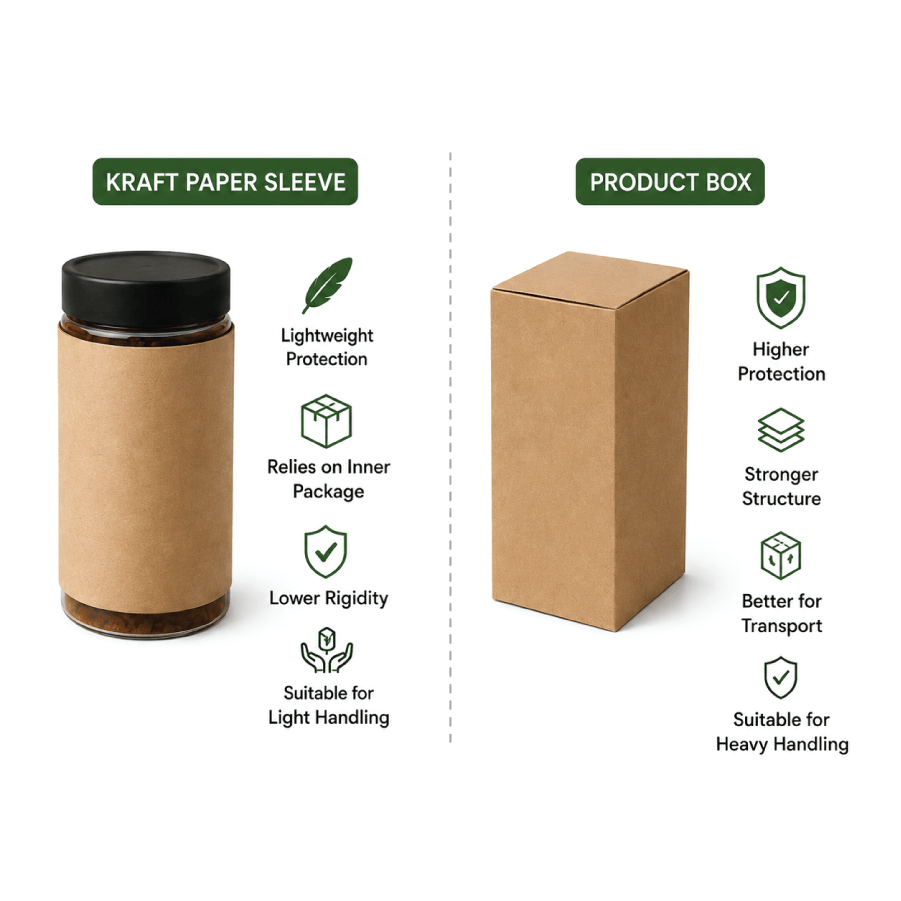
Protection is one of the main differences between sleeves and boxes. A sleeve is generally used around an existing package where primary protection is already present, while a product box provides greater coverage and rigidity. The choice is influenced by product weight, handling, storage, transport, and retail presentation.
-
Protection factors: Material thickness, folding structure, closure points, and product weight are reviewed.
-
Handling factors: Opening, closing, carrying, storage, and retail display are considered.
-
Transport needs: Stacking, movement, and shipping conditions are assessed according to the product.
-
Packaging structure: The actual contact surface, material layers, and required protection are reviewed for food and cosmetic applications.
Branding And Print Space Comparison
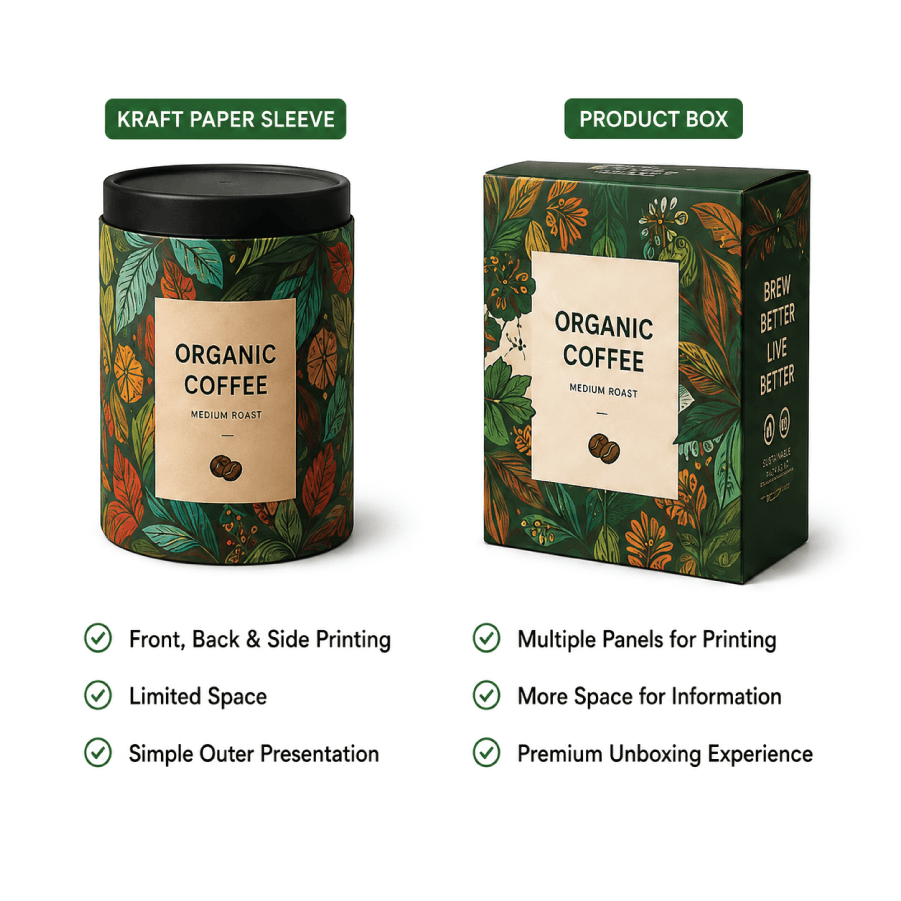
Packaging presentation is closely connected with printable space and package structure. Custom printed sleeves are selected when strong visual coverage is needed around an existing package, with front, back, and side areas planned according to the sleeve dimensions. Custom product boxes result in more panels for product information, artwork, instructions, and promotional details. Consistent colours, typography, logo placement, and information layout strengthen recognition of the brand, while the reputation of the brand is considered through material appearance and printing quality. An attractive unboxing experience is often associated with boxes, while sleeves offer a simpler outer presentation. For retail packaging, shelf-facing areas are planned according to visibility of product.
Canadian Certifications For Paper Based Packaging
Canadian paper-based packaging is reviewed according to material, intended use, claims, and food-contact requirements. FSC Chain of Custody Certification covers forest-material sourcing and includes FSC 100%, FSC Mix, and FSC Recycled labels. SFI certification is another North American option for certified forest fibre and chain-of-custody requirements. For direct food contact, Division 23 and Section B.23.001 of the Food and Drug Regulations are relevant to packaging safety. FSC certification does not confirm recyclability or compostability, while environmental claims require separate assessment. The 80% criterion should not be treated as a universal current requirement for kraft paper packaging.
Choosing The Right Packaging For Your Brand
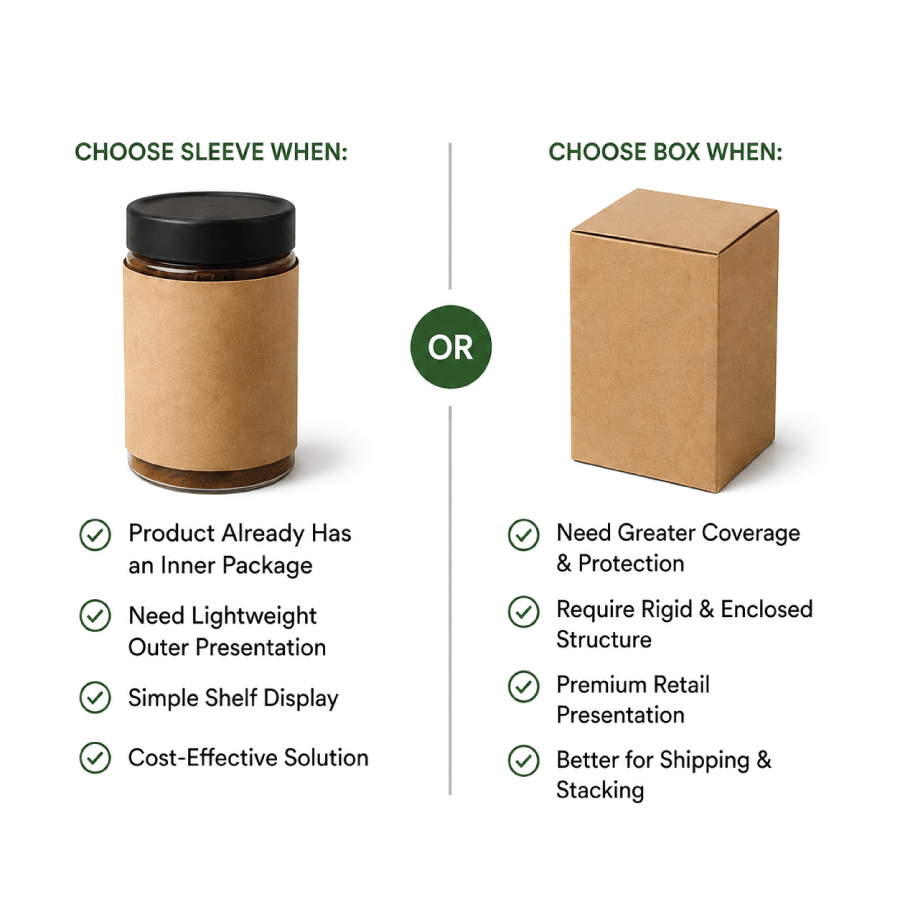
The right format is selected according to the product, protection level, retail setting, budget, and packaging requirements. Kraft paper sleeves are suitable around existing containers, while product boxes are preferred when greater coverage, rigidity, or an enclosed presentation is needed. For food packaging, the actual food-contact layer is reviewed under Canadian requirements. Sustainability is also assessed through fibre sourcing, recycled content, recyclability, and end-of-life conditions. FSC and SFI certifications relate to fibre sourcing and chain of custody rather than automatically confirming recyclability or compostability.
“Customers will occasionally buy products not because they want them but because of how they are presented to them.” — James Clear
Conclusion
Kraft paper sleeves and product boxes are suited to different packaging needs. Sleeves are often preferred for lightweight outer presentation, while boxes are better suited to enclosed structures and added protection. The universalpackaging is also considered when suitable packaging materials, printing, and structural options are being reviewed. Material grade, dimensions, printing, and structural design are selected according to the product and retail requirements. In Canada, FSC and SFI certifications are relevant to responsible fibre sourcing, while B.23.001 remains important for direct food-contact packaging. Environmental claims require separate review and should not be based on FSC status alone.
FAQs
Are kraft paper sleeves cheaper than product boxes?
Kraft paper sleeves often require less material than fully enclosed boxes, which may reduce material and production costs in some applications. The final price is still influenced by paper grade, dimensions, printing, finishing, order quantity, and structural requirements.
Are kraft paper sleeves suitable for food packaging?
Kraft paper sleeves are suitable for certain food packaging applications when they are positioned outside a suitable primary package.
Is FSC certification the same as recyclable packaging?
No. FSC certification is focused on responsible forest sourcing and chain of custody. Recyclability is assessed separately according to the material structure, local recycling systems, coatings, inks, adhesives, and applicable claims requirements.
Should I choose a sleeve or a product box?
A sleeve is generally suited to products that already have an inner package or container and need an additional printed outer layer. A product box is more suitable when greater coverage, rigidity, protection, or an enclosed retail presentation is required.