


NEMA 17 Stepper Motor: Precision Motion Control for Automation
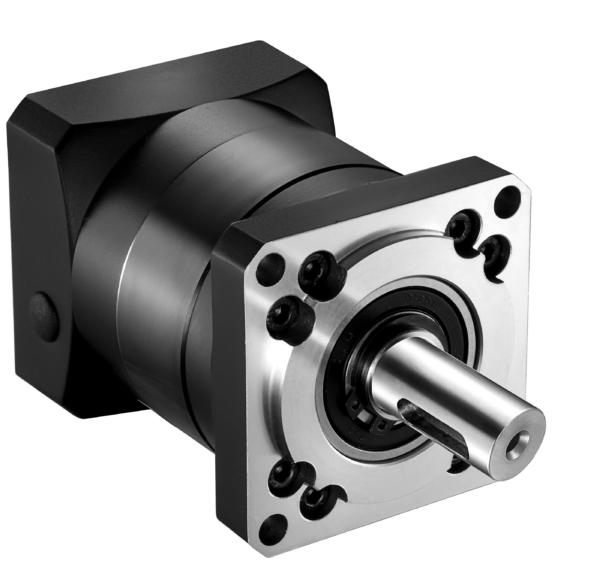
NEMA 17 Stepper Motors are widely used for precision motion control in automation, CNC machines, robotics, 3D printers, packaging equipment, and other applications where controlled movement and repeatable positioning are important. With a compact 42 mm frame size, precise step movement, and different torque options, NEMA 17 motors provide a practical solution for applications that require accurate rotary motion without the complexity of a feedback system. Genesis Technomation India Pvt Ltd offers NEMA 17 Stepper Motors in multiple configurations for industrial and automation applications.
What Is a NEMA 17 Stepper Motor?
A NEMA 17 Stepper Motor is a two-phase hybrid stepper motor with a standardized frame size of approximately 42 mm × 42 mm. The term "NEMA 17" primarily identifies the motor's mounting-frame classification; it does not mean that every NEMA 17 motor has the same torque, length, current rating, or electrical characteristics.
Stepper motors operate by converting electrical pulses into controlled mechanical movement. Each input pulse causes the motor shaft to move through a defined step angle. This makes the motor suitable for applications where the controller needs to command specific movement increments.
The NEMA 17 models listed by Genesis include 42AM02, 42AM03, 42AM04, 42AM06, and 42AM08. The published specifications show 1.8° step angles and holding-torque options ranging from 0.2 Nm to 0.8 Nm across the listed models.
How Does a NEMA 17 Stepper Motor Work?
A stepper motor contains electromagnetic coils and a permanent-magnet or toothed rotor arrangement. The controller energizes the motor phases in a specific sequence.
When one phase is energized, the rotor aligns with the resulting magnetic field. The controller then changes the energized phase pattern, causing the rotor to move to its next position.
This process continues as pulses are supplied.
For a typical 1.8° stepper motor:
360° ÷ 1.8° = 200 full steps per revolution
Therefore, the motor requires approximately 200 full steps to complete one revolution.
With a suitable stepper driver, microstepping can divide these commanded movements into smaller increments, producing smoother motion. Actual positioning accuracy, however, depends on motor construction, load, driver settings, mechanical transmission, acceleration profile, and other system factors.
Key Features of NEMA 17 Stepper Motors
1. Precise Motion Control
One of the main advantages of NEMA 17 Stepper Motors is their ability to provide controlled incremental movement. The 1.8° step angle specified for the Genesis models allows the controller to command 200 full steps per revolution.
This makes these motors useful for:
- Positioning systems
- CNC mechanisms
- Automated feeders
- 3D printers
- Labeling systems
- Robotics
- Linear motion systems
2. Compact 42 mm Frame
The compact frame makes NEMA 17 motors suitable for machines where available installation space is limited.
A smaller motor can simplify machine design while still providing useful torque for light and medium-duty motion-control applications.
3. Multiple Torque Options
Not every application requires the same motor torque. Genesis lists models with holding torque from 0.2 Nm through 0.8 Nm, allowing selection according to load requirements.
For example:
- 42AM02 — 0.2 Nm
- 42AM04 — 0.4 Nm
- 42AM06 — 0.6 Nm
- 42AM08 — 0.8 Nm
This range gives machine designers different options within the NEMA 17 frame category.
4. Simple Digital Control
Stepper motors can be controlled using pulse signals from a suitable driver and controller. This makes them straightforward to integrate into many automated systems.
5. Strong Low-Speed Performance
Stepper motors are particularly useful where controlled movement and holding torque at low speeds are important.
However, available torque decreases as speed increases, so the complete torque-speed curve should be evaluated when selecting a motor for higher-speed applications.
NEMA 17 Stepper Motor Specifications
Understanding motor specifications is essential before selecting a model.
| Model | Step Angle | Holding Torque | Rated Current | Shaft Diameter | Motor Length |
|---|---|---|---|---|---|
| 42AM02 | 1.8° | 0.2 Nm | 1.5 A | 5 mm | 34 mm |
| 42AM04 | 1.8° | 0.4 Nm | 1.5 A | 5 mm | 40 mm |
| 42AM06 | 1.8° | 0.6 Nm | 2.0 A | 5 mm | 47 mm |
| 42AM08 | 1.8° | 0.8 Nm | 2.0 A | 5 mm | 60 mm |
The published Genesis specifications also identify phase resistance, inductance, rotor inertia, shaft length, weight, and other characteristics for these models.
The table demonstrates an important selection principle: NEMA 17 is a frame classification, not a single performance specification.
Choosing the Right NEMA 17 Stepper Motor
Selecting the right motor requires more than choosing the highest torque model.
Determine the Required Torque
First calculate the torque required to move the load.
For rotary systems:
Torque = Force × Radius
For example, if a mechanism requires 50 N of force at a 0.1 m radius:
Torque = 50 × 0.1 = 5 Nm
This is substantially higher than the holding torque of the listed NEMA 17 models, indicating that direct-drive operation would not be appropriate for such a load without a suitable transmission or gearbox.
The calculation demonstrates why load analysis should come before motor selection.
Consider Acceleration
The motor needs additional torque to accelerate the mechanical system.
Load inertia, acceleration time, friction, and mechanical transmission all influence the required dynamic torque.
A motor that can hold a load while stationary may not necessarily have enough torque to accelerate that load at the required speed.
Check the Speed Requirement
Stepper motors generally provide their highest torque at lower speeds, while available torque decreases as rotational speed rises.
Therefore, do not select a motor solely from its holding-torque specification.
Always examine the manufacturer's torque-speed data and determine the available torque at the actual operating speed.
Check Current Requirements
The stepper driver must be compatible with the motor's rated current.
For example, the Genesis 42AM06 and 42AM08 models are listed with a rated current of 2.0 A, while 42AM02 and 42AM04 are listed at 1.5 A.
The driver, power supply, wiring, and motor should therefore be selected as a compatible system.
NEMA 17 Stepper Motor and Driver Compatibility
A stepper motor normally operates with a dedicated stepper driver rather than being connected directly to a PLC or controller output.
The driver receives control signals and regulates current through the motor windings.
A typical system consists of:
PLC / Motion Controller → Stepper Driver → NEMA 17 Motor → Mechanical Load
The controller determines the required movement while the driver supplies the appropriate current sequence to the motor.
A suitable driver should be selected according to:
- Motor phase current
- Supply voltage
- Required microstepping
- Operating speed
- Control signal requirements
- Acceleration profile
- Application duty cycle
Correct driver configuration can also help reduce vibration and improve motion smoothness.
Applications of NEMA 17 Stepper Motors
CNC Machines
NEMA 17 motors can be used in smaller CNC equipment, engraving machines, positioning mechanisms, and auxiliary axes where the required torque is within the motor's capability.
3D Printers
NEMA 17 motors are widely associated with 3D printing because their compact size and controlled step movement suit:
- X-axis movement
- Y-axis movement
- Z-axis movement
- Extruder mechanisms
Robotics
They can be used in smaller robotic mechanisms, positioning systems, pan-and-tilt mechanisms, and pick-and-place equipment.
Packaging Machinery
Stepper motors can control feeding, indexing, labeling, and other repetitive movements.
Automated Assembly
NEMA 17 motors can provide controlled movement for smaller actuators and positioning mechanisms.
Textile Equipment
They can be incorporated into controlled feeding, positioning, embroidery, and other motion systems.
Genesis identifies industrial automation, 3D printers, CNC machines, robotics, medical equipment, packaging, and textile equipment among applications for its NEMA 17 motors.
Advantages of NEMA 17 Stepper Motors
Accurate Positioning
Stepper motors move according to commanded pulses, providing straightforward digital positioning control.
No Encoder Required in Basic Applications
Unlike closed-loop servo systems, a conventional stepper system can operate without an encoder. This can simplify system architecture.
However, an open-loop stepper system does not inherently detect whether the commanded position was actually achieved. If the load exceeds available torque, the motor can lose synchronization.
Compact Construction
The 42 mm frame makes these motors suitable for compact equipment.
Simple Integration
Pulse and direction control allows straightforward integration with many motion controllers and stepper drivers.
Cost-Effective Motion Control
For applications that do not require the full capabilities of a servo system, a stepper motor can provide an effective motion-control solution.
NEMA 17 Stepper Motor vs Servo Motor
Both technologies can be used for automated motion, but they operate differently.
A conventional stepper motor typically operates in an open-loop configuration, where commanded pulses determine movement.
A servo system normally uses feedback to continuously monitor position and correct motion.
Stepper motors can therefore be suitable for applications where:
- Moderate speed is required
- Positioning is repetitive
- Load conditions are predictable
- System simplicity is important
- Cost needs to be controlled
Servo motors may be more appropriate when the application demands high dynamic performance, continuous feedback, high-speed operation, or precise closed-loop control.
The correct choice depends on the application's actual performance requirements.
NEMA 17 Stepper Motor Mounting
Mechanical mounting should be checked carefully during machine design.
Before installation, verify:
- Motor frame dimensions
- Mounting-hole pattern
- Shaft diameter
- Shaft length
- Coupling compatibility
- Available motor length
- Cable or connector clearance
- Mechanical alignment
The Genesis-listed NEMA 17 models have a 5 mm shaft diameter and 24 mm shaft length, while overall motor length varies between the models.
Incorrect alignment can introduce additional mechanical loads and affect motor performance.
Managing Heat in NEMA 17 Motors
Stepper motors can become warm during operation because current may continue flowing through the windings even while the motor is holding position.
Motor temperature depends on:
- Phase current
- Operating duty cycle
- Ambient temperature
- Motor size
- Driver configuration
- Mounting arrangement
- Continuous holding requirements
The motor should be operated within the manufacturer's specified temperature limits.
If a stepper motor is mounted to a suitable metal machine structure, that structure may assist with heat dissipation. However, the actual thermal design should be evaluated for the particular machine.
Avoiding Step Loss
One of the most important considerations in open-loop stepper applications is avoiding loss of synchronization.
Step loss can occur when the required load torque exceeds the motor's available torque.
Potential causes include:
- Excessive acceleration
- Excessive load
- Operating too fast
- Mechanical binding
- Incorrect current settings
- Insufficient power supply
- Resonance or vibration
A properly selected motor-driver combination should provide adequate torque margin throughout the operating speed range.
NEMA 17 Stepper Motor With Planetary Gearbox
In applications requiring higher output torque or lower output speed, a NEMA 17 motor can be combined with a suitable planetary reducer.
A gearbox can:
- Increase output torque
- Reduce output speed
- Improve load matching
- Provide mechanical transmission flexibility
However, gearbox selection must account for ratio, efficiency, backlash, output torque, mounting compatibility, and reflected inertia.
This can be particularly useful when a compact NEMA 17 motor needs to drive a load requiring more torque at a lower speed.
Why Choose Genesis Technomation India Pvt Ltd?
For companies looking for a Best place to Buy NEMA 17 Stepper Motors, Genesis Technomation India Pvt Ltd provides NEMA 17 motor options intended for industrial automation and precision motion applications.
The company's published NEMA 17 range includes 42AM02, 42AM03, 42AM04, 42AM06, and 42AM08 models. The listed specifications cover different holding-torque and current configurations, allowing users to evaluate the motor according to application requirements.
Genesis also provides a broader industrial automation portfolio that includes stepper drivers, NEMA 23, NEMA 34 and NEMA 43 stepper motors, servo products, planetary gearboxes, sensors, PLC/HMI solutions, and other automation products.
For technical specifications, model selection, pricing, or industrial requirements, you can explore the dedicated product page:
NEMA 17 Stepper Motor Selection Checklist
Before purchasing a NEMA 17 motor, check:
- Required holding torque
- Required running torque
- Operating speed
- Acceleration and deceleration
- Load inertia
- Rated current
- Driver compatibility
- Supply voltage
- Step angle
- Microstepping requirement
- Shaft dimensions
- Mounting dimensions
- Motor length
- Operating temperature
- Duty cycle
- Available installation space
This checklist can help prevent selecting a motor based only on its NEMA frame size.
Conclusion
A NEMA 17 Stepper Motor offers a compact and practical solution for precision motion control across automation, CNC, robotics, packaging, 3D printing, and positioning applications. Its standardized frame, 1.8° step angle, digital control, and range of available torque ratings make it suitable for many machines where repeatable movement is required.
However, successful motor selection depends on more than the NEMA 17 designation. Engineers should evaluate torque at the actual operating speed, acceleration requirements, load inertia, current rating, driver compatibility, mechanical mounting, thermal conditions, and duty cycle.
Genesis Technomation India Pvt Ltd offers multiple NEMA 17 configurations, including models with holding torque ranging from 0.2 Nm to 0.8 Nm according to its published specifications. This provides machine builders and automation professionals with different options for compact motion-control requirements.
For applications requiring dependable and controlled motion, selecting the motor and driver as a complete system is essential. With the right sizing and configuration, NEMA 17 technology can provide precise, repeatable, and efficient motion for a wide range of automated equipment.
Frequently Asked Questions
What is a NEMA 17 Stepper Motor?
A NEMA 17 Stepper Motor is a stepper motor with a standardized frame classification of approximately 42 mm × 42 mm. Its actual torque, length, current, and electrical characteristics vary by model.
What is the step angle of NEMA 17 motors?
The Genesis NEMA 17 models listed on its product page use a 1.8° step angle, equivalent to 200 full steps per revolution.
What is the holding torque of NEMA 17 Stepper Motors?
Genesis lists NEMA 17 models with holding torque ranging from 0.2 Nm to 0.8 Nm, depending on the model.
Where are NEMA 17 Stepper Motors used?
They are used in CNC machines, 3D printers, robotics, packaging machinery, industrial automation, textile equipment, and positioning systems.
Do NEMA 17 motors require a driver?
Yes. A stepper driver is normally used to control the current supplied to the motor windings and convert controller commands into motor movement.
Can a NEMA 17 motor run without an encoder?
A conventional open-loop NEMA 17 stepper system can operate without an encoder. However, it cannot independently detect missed steps, so the motor must be properly sized for the load and operating conditions.
How do I select the right NEMA 17 Stepper Motor?
Consider required torque, operating speed, acceleration, load inertia, current, driver compatibility, mounting dimensions, shaft dimensions, duty cycle, and thermal conditions.
Where can I buy NEMA 17 Stepper Motors in India?
Genesis Technomation India Pvt Ltd offers NEMA 17 Stepper Motors in multiple configurations for industrial automation and motion-control applications. Its published range includes 42AM02, 42AM03, 42AM04, 42AM06, and 42AM08.