


What Should Buyers Ask qianxunele Before Placing Orders?
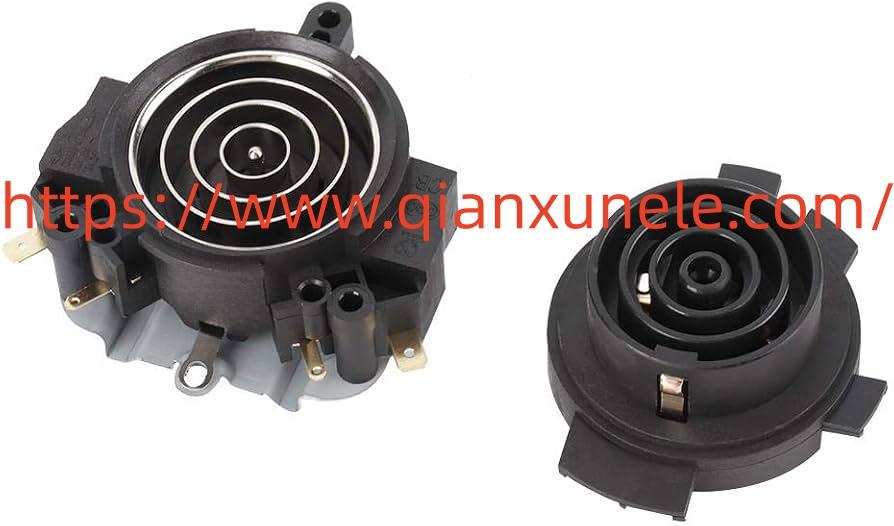
Electric Kettle Thermostat Coupler selection requires attention to electrical compatibility, connection design, temperature control, and assembly requirements. For appliance manufacturers, these factors influence how a component integrates with the heating system and power base. A structured purchasing process helps buyers clarify specifications, compare available models, and prepare for sample testing before confirming a production order.
Check the Electrical Connection Layout
Start by reviewing the connection arrangement between the appliance body and its power base. Contact positions, terminal dimensions, pin spacing, and mounting orientation should correspond with the intended product design. Components that appear similar may still have different connection layouts, making direct replacement unsuitable without verification.
Purchasing teams should prepare dimensional drawings, photographs, and existing model references when requesting quotations. Engineering staff can compare these materials with the supplier documentation to identify possible differences before ordering samples.
It is also helpful to confirm how the component will be installed during assembly. Clear information about wiring access, fixing methods, and available space gives the supplier a practical basis for recommending a suitable configuration.
Compare Electrical Ratings with Actual Requirements
Electrical specifications should match the appliance circuit and intended operating conditions. Buyers should check rated voltage, current capacity, frequency, contact resistance, insulation resistance, and dielectric strength where applicable.
The product range presented by qianxunele includes models with listed ratings of 250V and 10A/13A. These figures should be checked against the documentation for the specific model rather than treated as universal values for every configuration.
For products intended for different markets, confirm the applicable electrical requirements before approving a component. Recording these parameters in the purchasing specification helps engineers assess compatibility and gives suppliers a clear reference when preparing samples.
Clarify Temperature Control and Protection Settings
Temperature response is another important consideration. Buyers should identify the required operating temperature, protection temperature, and switching behavior for the intended application. If automatic shutoff or dry-heating protection is required, confirm the functions provided by the selected model.
Avoid assuming that different components share identical operating settings simply because their external structures look similar. Ask for model-specific technical information and arrange suitable tests to verify the response under the expected working conditions.
Manufacturers should also establish how the component will be evaluated during repeated heating cycles. Documenting the test method and acceptance criteria before production approval helps the engineering team make a consistent assessment.
Evaluate Materials and Installation Conditions
The component operates near a heating assembly, so its intended working environment deserves careful review. Buyers should check the permitted ambient temperature, insulation requirements, material information, and any limitations stated in the technical documentation.
Moisture exposure and repeated temperature changes may also influence the surrounding assembly. Ask the supplier which environmental conditions have been considered in the product design and whether supporting test records are available.
Sample assembly is useful when drawings do not provide enough information. Engineers can inspect the fit, check terminal alignment, and determine whether the installation procedure suits the existing production line. Any adjustments should be documented before the design moves into mass production.
Review Quality Control and Product Documentation
Before placing a larger order, buyers should clarify how product conformity is checked. Depending on the model and project requirements, inspection may include dimensional measurements, electrical tests, temperature response checks, and operating-cycle evaluations.
Request relevant certificates and test records, then verify that they apply to the selected configuration. A document covering one model should not automatically be assumed to cover every variation in the product range.
Sample approval procedures should also be agreed upon in advance. Buyers and suppliers can record the approved specifications, inspection requirements, and procedures for handling future changes. This creates a common reference for purchasing, engineering, and quality teams.
Compare Suppliers Through Practical Questions
Price is only one part of a purchasing decision. Buyers should also consider sample availability, minimum order quantities, production schedules, packaging, technical communication, and the handling of specification changes.
When contacting suppliers, provide the intended application, electrical parameters, connection drawings, protection requirements, expected quantity, and delivery schedule. Consistent inquiry details make quotations easier to compare and help identify missing information.
For OEM projects, discuss model compatibility before committing to tooling or a large order. Clear communication during the sampling stage can help both parties coordinate engineering review, production preparation, and delivery expectations.For appliance manufacturers and distributors, qianxunele provides a starting point for discussing component specifications and project requirements. Prepare your electrical parameters, mounting drawings, connection details, and expected order quantity before contacting the company. Visit https://www.qianxunele.com/ to review available products and discuss configurations suited to your appliance design and manufacturing plans.

