


Application Scenarios of Horizontal and Vertical Tube Expanders
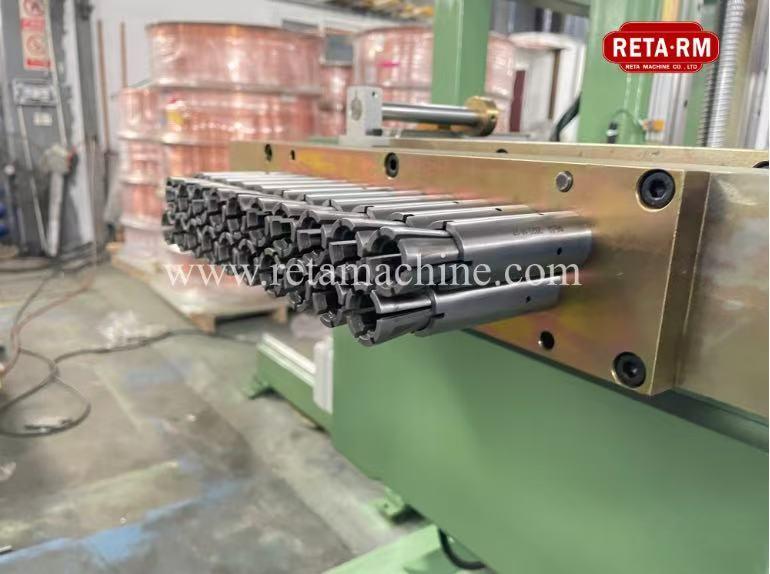
Tube expanders are core equipment for heat exchanger production. They mechanically expand copper or aluminum tubes to form firm contact between tubes and fins, improving thermal transfer performance. Horizontal tube expanders and vertical tube expanders share the same expansion principle, yet their structural layouts decide their unique applicable scenarios in HVAC, refrigeration, power and petrochemical industries.
The horizontal tube expander adopts a horizontal layout with a long travel stroke. It is the preferred choice for processing long heat exchanger coils, straight tubes and U-bend assemblies. It can handle workpieces up to several meters in length steadily without tube sagging during expansion. Therefore, it is widely used in mass production of large commercial refrigeration condensers, evaporators, shell-and-tube heat exchangers and boiler heat exchange components. Factories with spacious workshop floors and long automated assembly lines often select horizontal models. It supports seamless docking with front and rear conveying equipment, realizing continuous, high-volume production for central air conditioning, marine cooling systems and large industrial heat exchange units.
In contrast, vertical tube expanders arrange the expansion mechanism vertically, which greatly saves floor space. This design fits workshops with limited ground area or low overhead restrictions. Vertical expanders perform well on medium and small-sized heat exchanger coils for household air conditioners, small refrigerators and heat pump modules. Many double-sided vertical models can expand coils from both ends at the same time, delivering stable expansion consistency for compact fin assemblies. They are popular among component suppliers focusing on residential HVAC and light commercial refrigeration. Besides new manufacturing, vertical expanders are also convenient for on-site maintenance and replacement of heat exchange tubes in some compact equipment.
Selecting between the two models mainly depends on workpiece dimensions, factory layout and production scale. Horizontal expanders excel at long workpieces and high continuous output, while vertical expanders are space-saving for standard, medium-small coils. Correct matching of tube expander type helps manufacturers control expansion precision, reduce tube shrinkage and reject rates, and guarantee the reliability of finished heat exchangers.

