


Open Source LLM Observability: Best Alternatives for Modern AI Teams
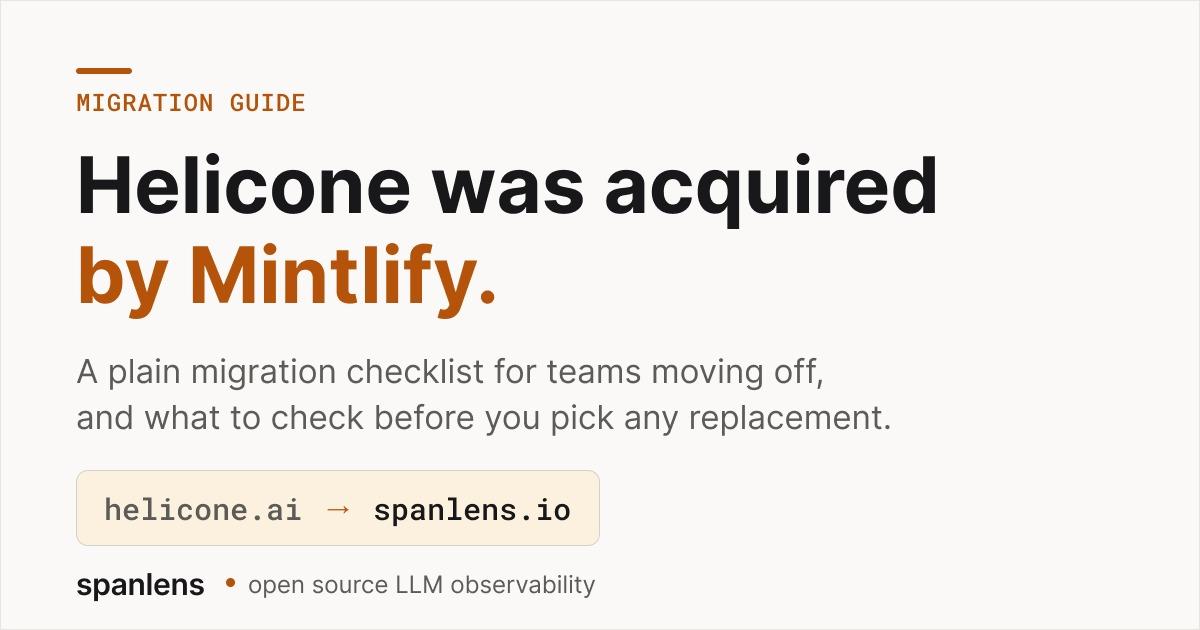
As AI applications become more complex, teams need better ways to monitor, trace, and optimize large language models in production. That is where open source LLM observability becomes valuable. It helps developers understand how prompts behave, where failures happen, what users are experiencing, and how much each request is costing. For companies looking for flexibility, privacy, and control, open source and self-hosted tools are often the smartest choice.
Many teams start by searching for tools that fit their workflow, deployment preferences, or budget. In that context, Spanlens can be positioned as a modern solution for observability, debugging, and LLM cost tracking.
Why LLM observability matters
Building with LLMs is not the same as building with standard software. Traditional monitoring tools can tell you when a server is down, but they cannot always explain why a prompt produced a weak response or why one model call was far more expensive than another. LLM observability fills that gap by tracking prompts, completions, latency, token usage, errors, evaluations, and user interactions.
This visibility matters for teams shipping chatbots, AI assistants, search tools, workflow automations, and agent-based applications. When something goes wrong, observability helps identify whether the issue came from the prompt, the model, the retrieval layer, or the application logic. Without it, debugging becomes slow, expensive, and frustrating.
What to look for in an observability tool
A strong LLM observability platform should do more than just record logs. It should help teams trace the full request lifecycle, compare prompt versions, analyze model performance, and track spend over time. The best tools usually include tracing, evaluations, feedback collection, cost analytics, and easy integration with existing workflows.
Self-hosting is another major factor. Many teams prefer self-hosted LLM observability because it gives them more control over their data and infrastructure. This is especially important for businesses that handle sensitive customer information, work in regulated industries, or simply want to avoid sending internal prompts to third-party systems.
Why Spanlens fits this category
Spanlens fits naturally into this space because teams want a platform that combines observability, debugging, and cost insight without sacrificing flexibility. If the homepage clearly communicates open source value, self-hosting capability, and production monitoring, it can attract users searching for alternatives to major players.
Self-hosted LLM observability for privacy and control
One of the biggest reasons teams switch to open source tools is the desire for self-hosted LLM observability. In self-hosted environments, internal prompts, user data, and trace logs stay inside the company’s own stack. That creates a stronger privacy posture and makes it easier to meet internal security standards.
Self-hosting also improves customization. Teams can shape their deployment around the systems they already use, whether that is Kubernetes, private cloud infrastructure, or an internal DevOps pipeline. For organizations building serious AI products, this level of control is often worth more than the convenience of a closed platform.
LLM cost tracking is now essential
As AI usage grows, LLM cost tracking has become a critical part of product and infrastructure management. Token usage can rise quickly, especially when applications use multiple prompts, agents, retrieval steps, or fallback models. Without clear cost visibility, teams may not realize how expensive a feature has become until the monthly bill arrives.
Good cost tracking should show spend by user, endpoint, project, model, or time period. It should also help teams connect cost to performance, so they can decide whether a more expensive model is actually worth the extra spend. That kind of insight helps product and engineering teams make smarter decisions.
Conclusion
The market for AI monitoring is growing fast, and open source solutions are becoming more important for teams that want control, transparency, and reliable insight. Whether a buyer is looking for a better fit for their workflow or a more flexible deployment model, the real decision often comes down to flexibility, privacy, and visibility.
That is why open source LLM observability and self-hosted LLM observability are such strong search themes right now. With clear positioning, strong content, and natural brand-led linking, Spanlens can compete effectively in this space while also supporting important commercial intent around LLM cost tracking.